
Online Quran Classes for Children: A Parents’ Practical Guide
Direct answer: Children succeed in online Quran classes when parents protect a short, consistent lesson slot, stay nearby for early sessions, and use assessment to match level — not when they chase advanced labels too early.
Al Hidaya Editorial Team
Academy editorial
Published
3 min read · Operational guide
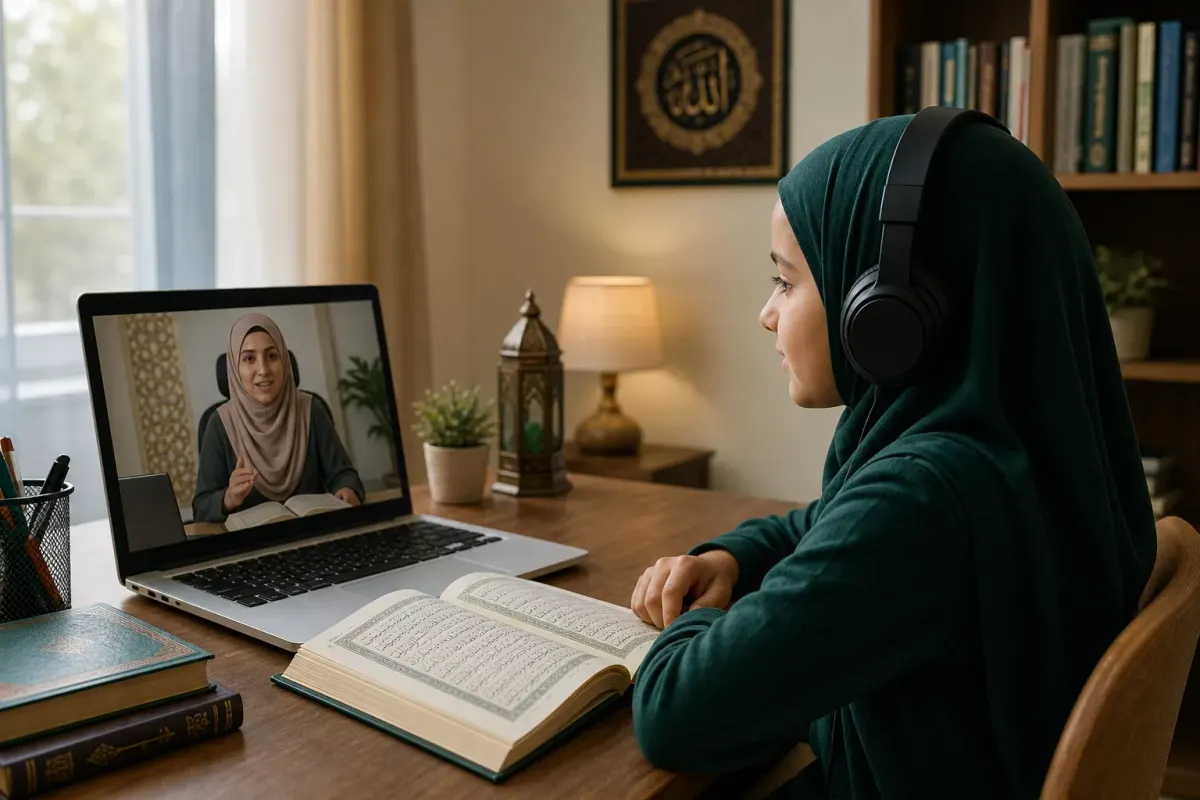
Parents often ask whether online Quran classes “work” for children. They can — when the setup matches a child’s attention span, the pathway matches their level, and adults treat the weekly slot as non-negotiable as a school appointment.
What online success looks like for kids
Success is rarely a dramatic overnight leap. More often it looks like: the child logs in without a fight, recognizes a few more letters or words each week, and leaves the lesson feeling capable. Celebrate those smaller markers instead of comparing your child to older cousins or social videos.
Prepare the space before the first login
- Choose a predictable seat with fewer toys in reach
- Test camera, microphone, and internet five minutes early
- Keep water nearby; avoid snack chaos mid-lesson unless the teacher suggests a break
- Stay within earshot for early lessons so you can help with mute buttons and focus resets
Match the pathway to age and level
Young beginners often thrive with foundational letter work associated with Noorani Qaida before fluent mushaf reading. Children who already read may need Quran Reading practice with gentle correction. Islamic Studies can complement Quran lessons when families want structured values and story learning — without replacing reading practice time.
Work with attention spans, not against them
A 30-minute one-to-one class is a common unit at Al Hidaya because it can hold focus without exhausting a child. If your child is very young, ask during assessment how pacing and breaks are handled. Two well-attended short lessons per week usually beat one long irregular session.
Parent habits that help between classes
- Ask the teacher for one clear practice target after each lesson.
- Practice in a calm five-to-ten minute window — stop while it still feels positive.
- Use the same device setup so technical friction does not become the lesson.
- Share scheduling conflicts early rather than skipping silently.
How Free Assessment helps families
When you request a Free Assessment, share the child’s age, prior experience, language comfort, and your household schedule. The academy reviews that context and recommends a suitable pathway. An introductory class may be arranged when appropriate; it is not automatic for every student.
Next step for parents
If you are ready to begin, book a Free Assessment and mention that the learner is a child. Browse Noorani Qaida or Quran Reading course pages for orientation, then let placement refine the plan.
What age is suitable for online Quran classes?
Readiness varies by child. Assessment focuses on attention, device comfort, and foundational skills rather than a single universal age claim.
Should a parent stay on camera?
For early lessons, staying nearby is usually helpful. Agree the arrangement with the teacher so the child still builds independence over time.
Can siblings share one class?
One-to-one lessons are designed around a single learner’s pace. Ask during assessment about scheduling separate slots if more than one child is learning.
Related courses
Course pages remain the commercial landings for enrollment intent.
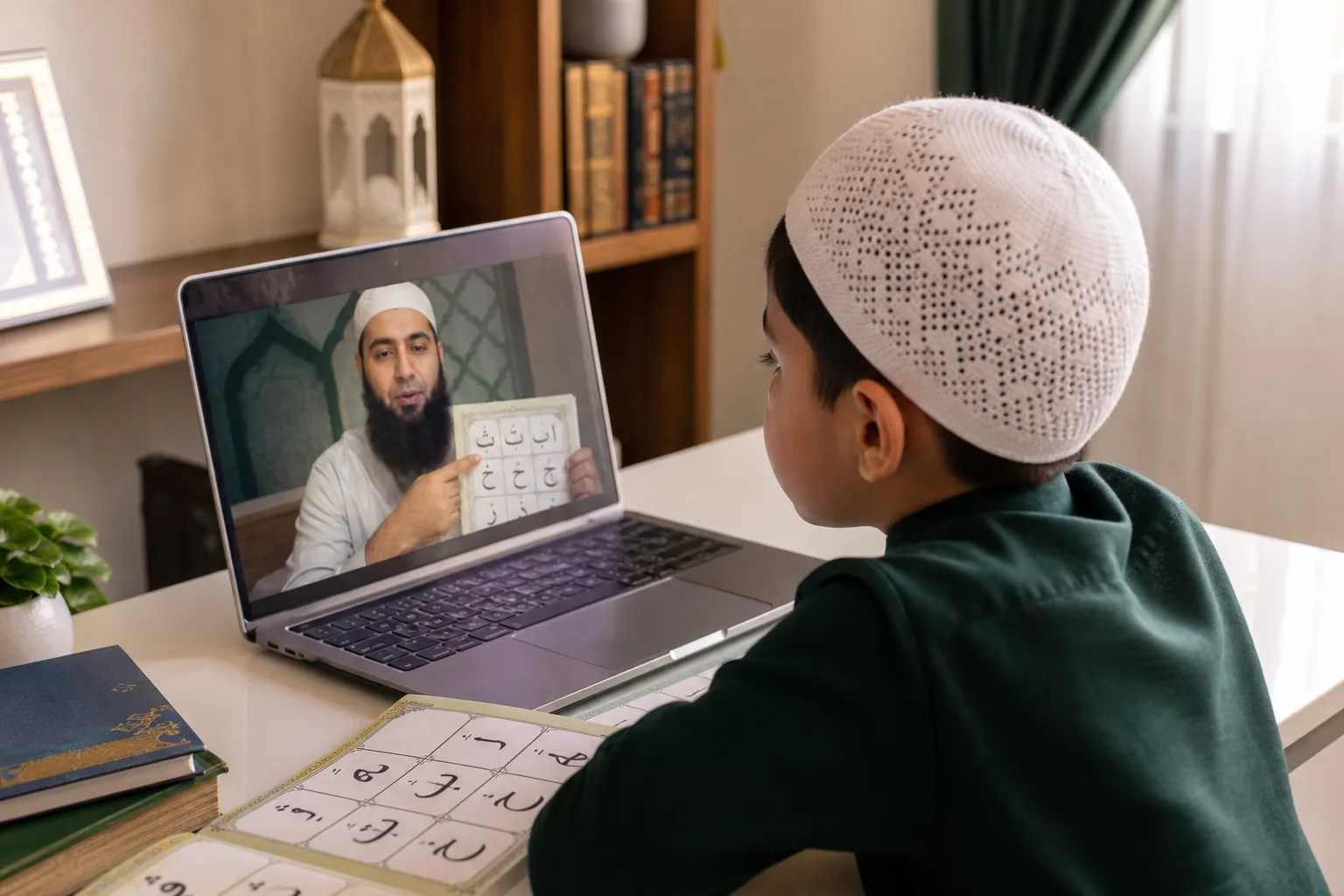
Noorani Qaida
For absolute beginners who need Arabic letter recognition, vowel marks, and joining practice before Quran reading — taught live, one-to-one, at a calm pace.
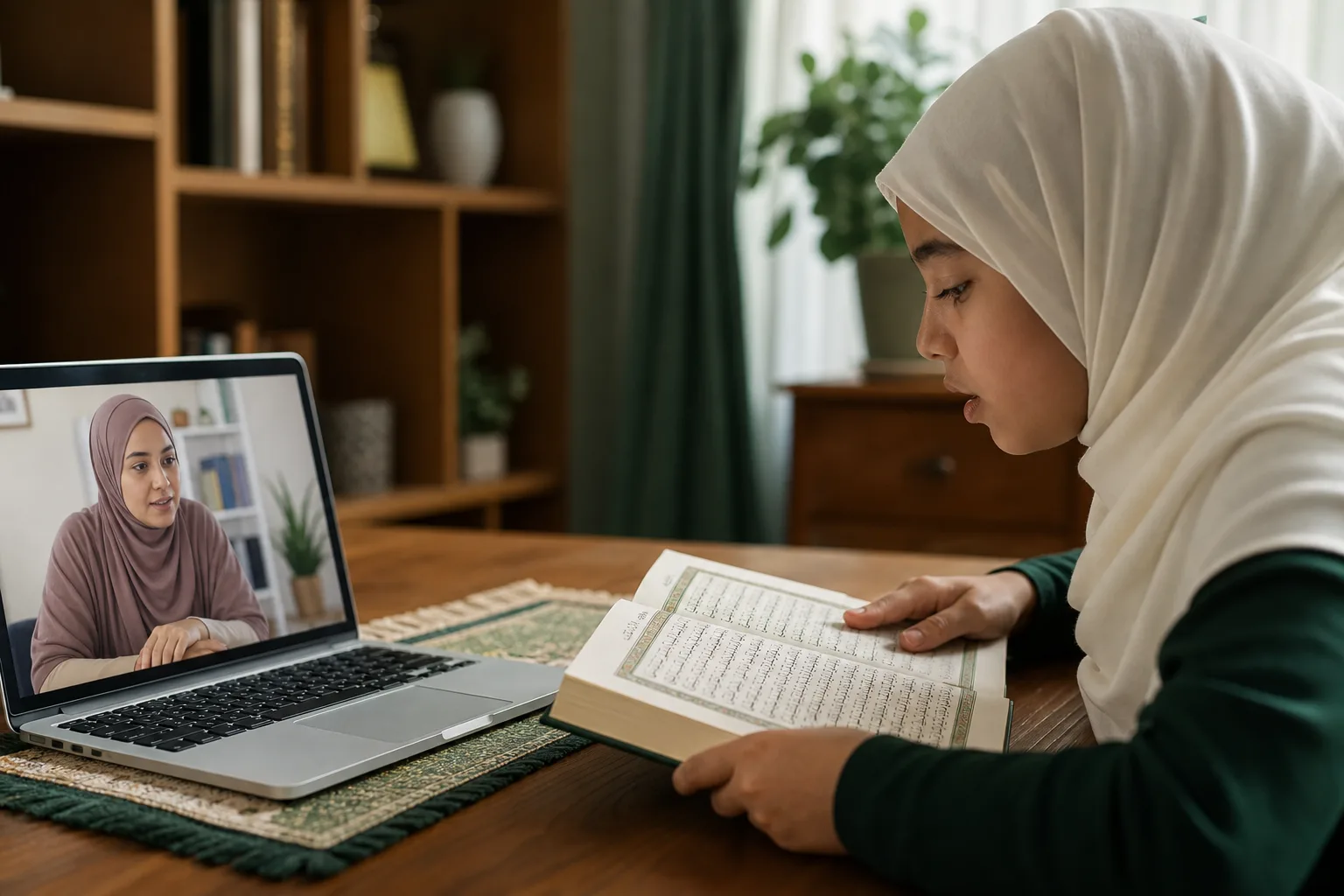
Quran Reading
For students who know the letters and are ready to read Quranic text with accuracy, fluency, and confidence under live teacher guidance.

Islamic Studies for Children
For children who need age-appropriate foundations in faith, worship, duas, manners, and character alongside Quran learning.