
How One-to-One Online Quran Lessons Work
Direct answer: One-to-one online Quran lessons are live video sessions focused on the individual learner: brief warm-up, guided practice with correction, and a clear homework target — scheduled after Free Assessment and teacher matching.
Al Hidaya Editorial Team
Academy editorial
Published
3 min read · Operational guide
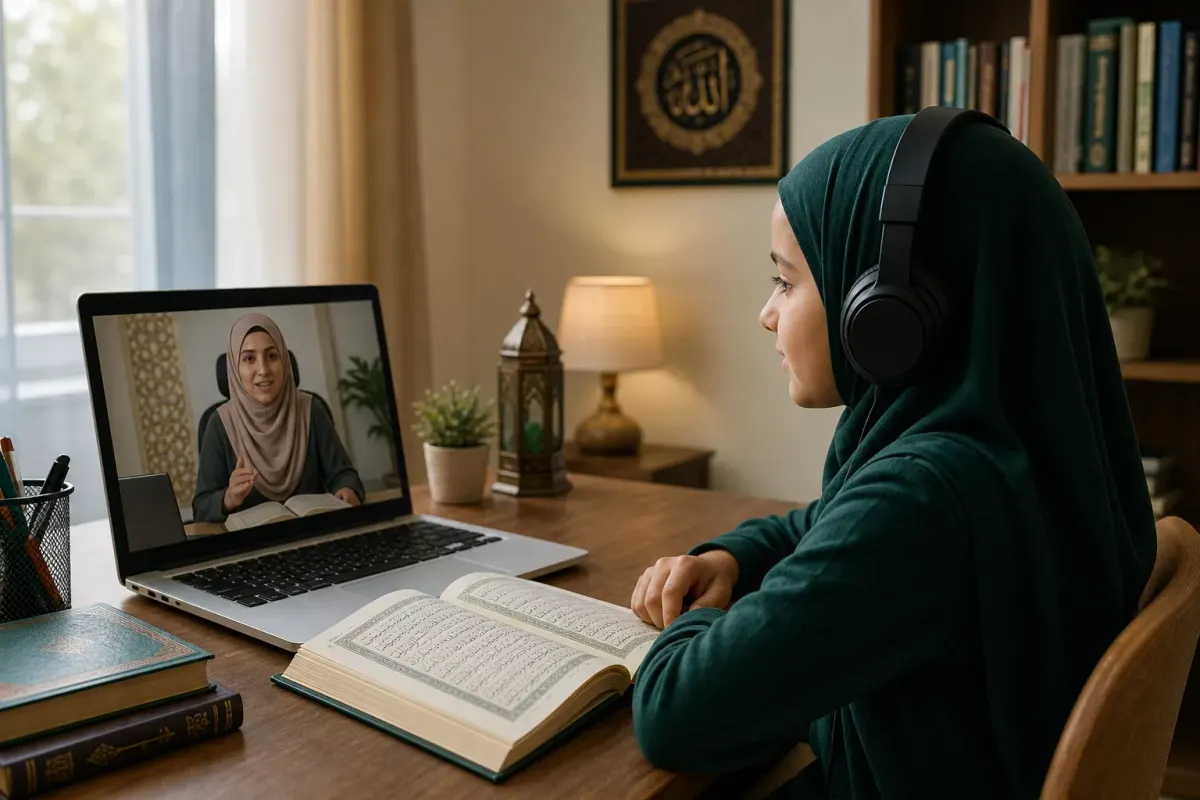
“One-to-one” means the lesson is built around a single learner — not a mute audience in a large webinar. At Al Hidaya Quran Academy, classes are personalized live sessions with flexible scheduling after a Free Assessment recommends a suitable pathway.
Before the first regular lesson
- You submit a Free Assessment with goals and availability.
- The academy reviews current level and discusses preferences.
- A pathway is recommended (for example Reading, Tajweed support, or beginner foundations).
- Schedule and teacher matching are confirmed when the plan is agreed.
An introductory class may be arranged when helpful. It is not promised automatically for every enrollment path.
Inside a typical lesson
While every teacher adapts to the learner, a healthy lesson pattern often includes: a short check-in, review of previous practice, guided new material with live correction, and a homework target the learner can actually finish before the next session.
- Warm-up: settle attention and reconnect to last week’s target
- Guided practice: reading or foundation drills with immediate feedback
- Correction style: patient, specific, and age-appropriate
- Close: one clear practice assignment written in plain language
Class length and monthly plans
Public pricing guidance at Al Hidaya uses a 30-minute class unit with monthly plan options (for example 8, 12, or 20 classes). Choose a volume that matches real attendance capacity. Details are confirmed during admissions — published figures are guidance, not a substitute for the assessment conversation.
Practice between lessons
Live lessons create correction. Progress still depends on short, honest practice between sessions. Five focused minutes most days usually outperforms a single rushed cram before class. Ask the teacher what “done” looks like for the week’s homework.
Adults and children in the same model
The one-to-one format serves both audiences with different pacing. Adults may prefer privacy and direct goals. Children may need parental proximity early and more frequent encouragement. Teacher matching considers language needs and preferences shared during assessment.
When to revisit the plan
- The learner outgrows beginner foundations and needs reading fluency work
- Schedule conflicts make attendance unreliable
- Goals shift toward memorization support or complementary Islamic Studies
- The teaching match is not a good interpersonal fit — raise this early with the academy
Next step
Ready to experience the model? Book a Free Assessment and share your goals. Review course pages for context, then confirm schedule after recommendation.
Are lessons recorded?
Recording policies can vary by privacy and consent. Ask during admissions if you need recordings for practice — do not assume they are automatic.
What if I miss a class?
Ask about the academy’s rescheduling policy during enrollment. Protecting the weekly slot remains the best prevention.
Can I switch teachers?
If the match is not working, contact the academy promptly. Matching exists to support learning, not to lock families into a poor fit.
Related courses
Course pages remain the commercial landings for enrollment intent.
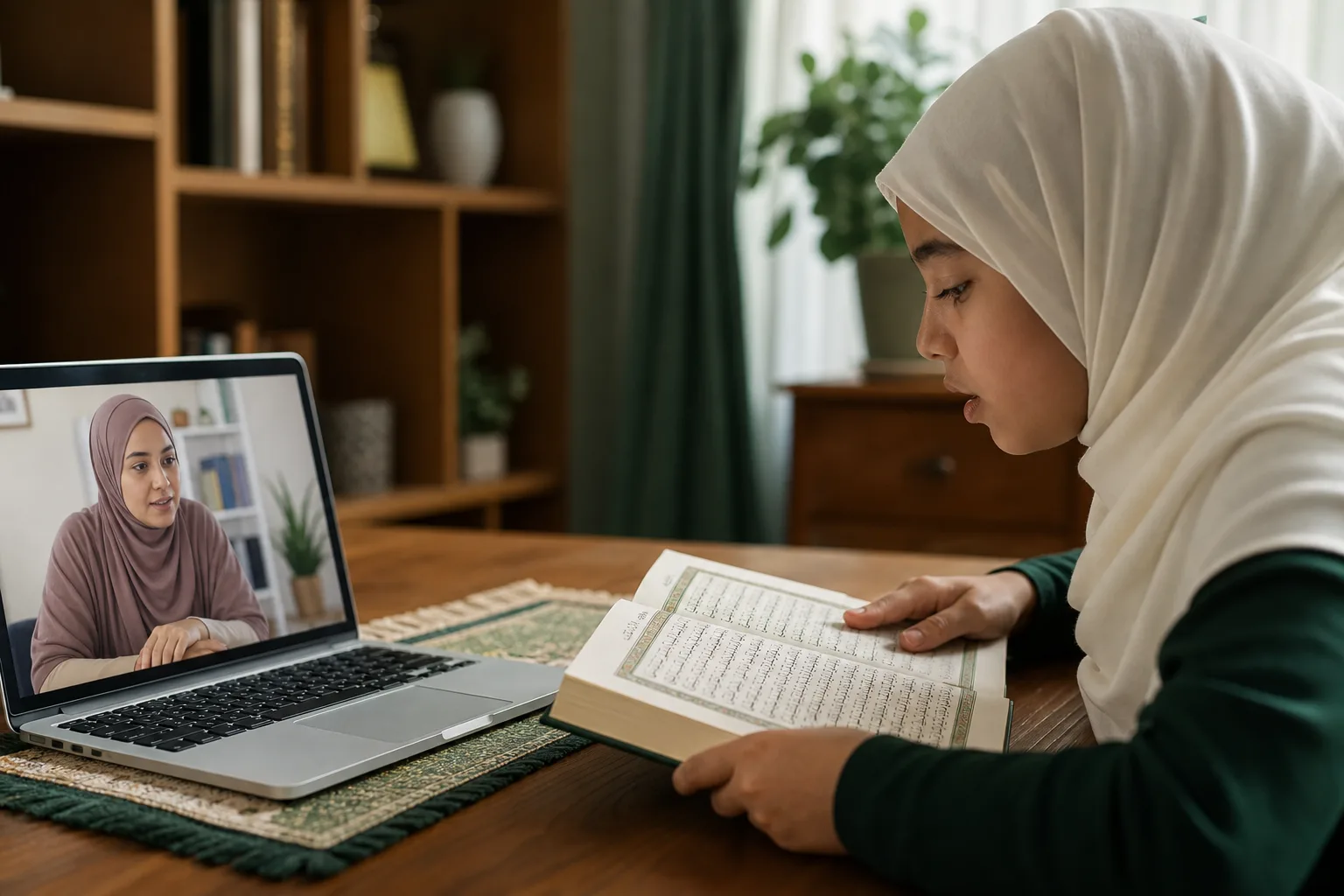
Quran Reading
For students who know the letters and are ready to read Quranic text with accuracy, fluency, and confidence under live teacher guidance.
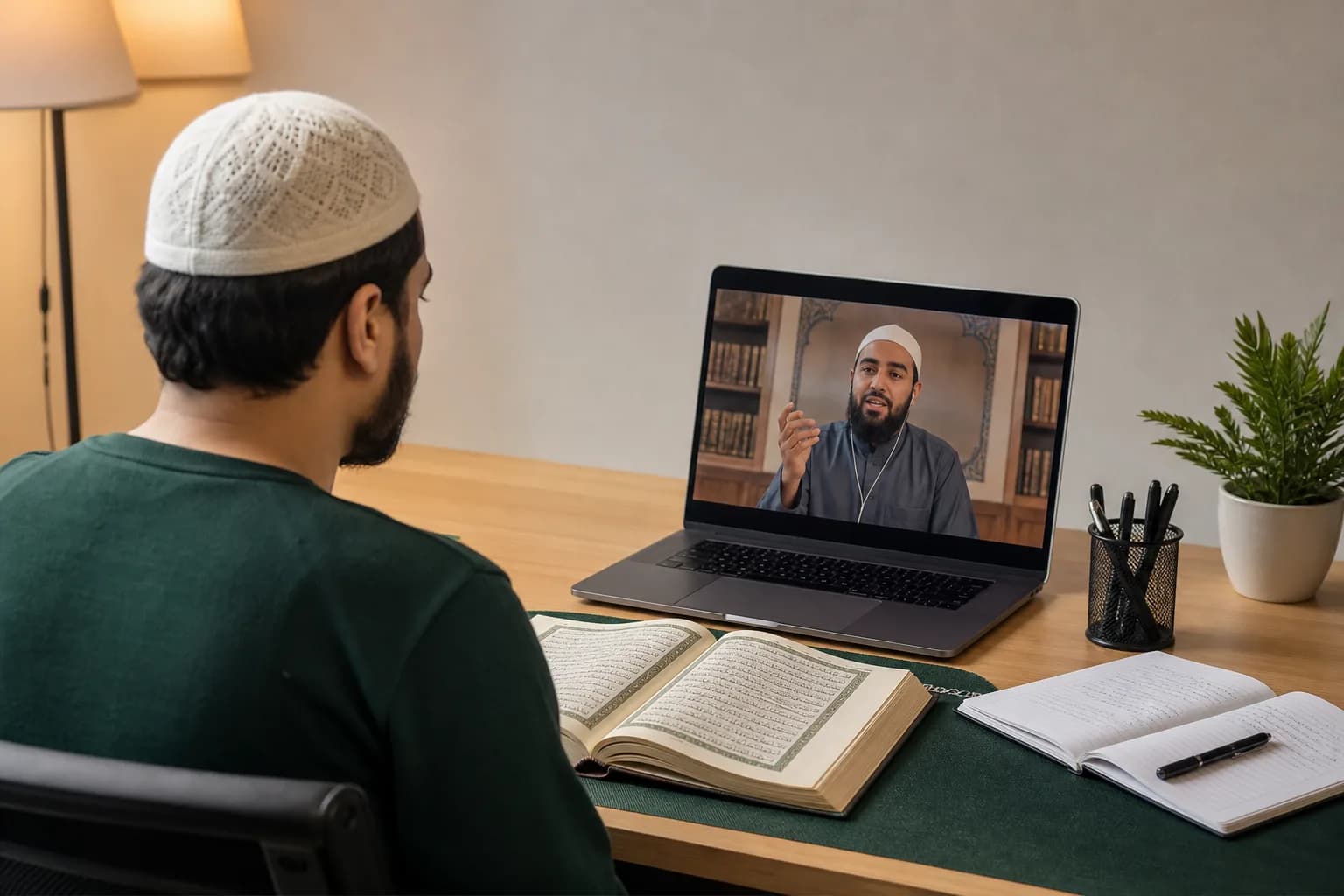
Quran with Tajweed
For readers who want essential Tajweed rules explained clearly and applied in supervised live recitation.
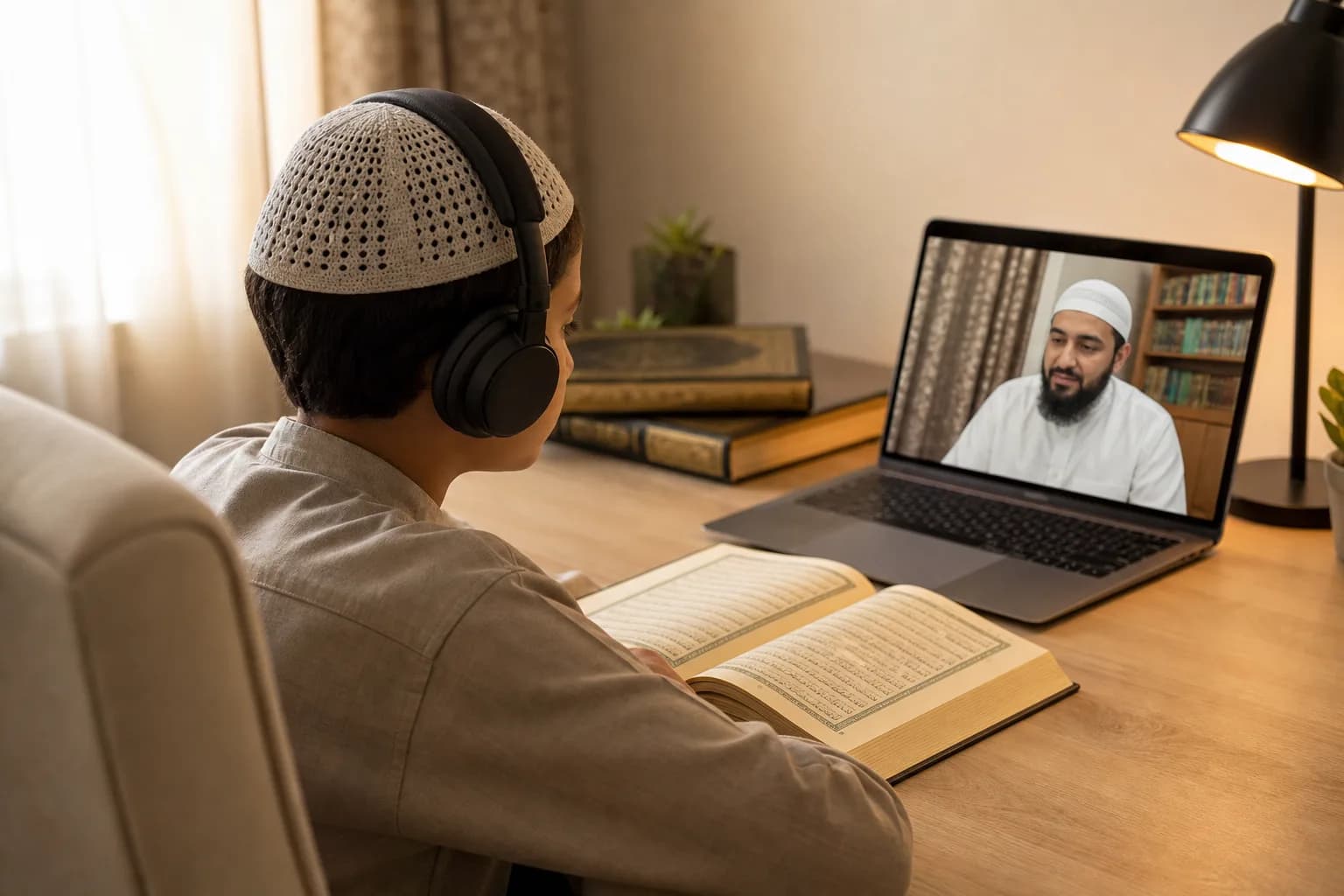
Quran Memorization (Hifz)
For motivated students who want structured memorization with strong revision habits and realistic weekly targets.