
How to Start Learning Quran Online: A Clear First-Week Plan
Direct answer: Start by clarifying the learner’s level and goals, book a Free Assessment so the academy can recommend a pathway, then confirm a realistic weekly schedule before the first regular lesson.
Al Hidaya Editorial Team
Academy editorial
Published
4 min read · Operational guide
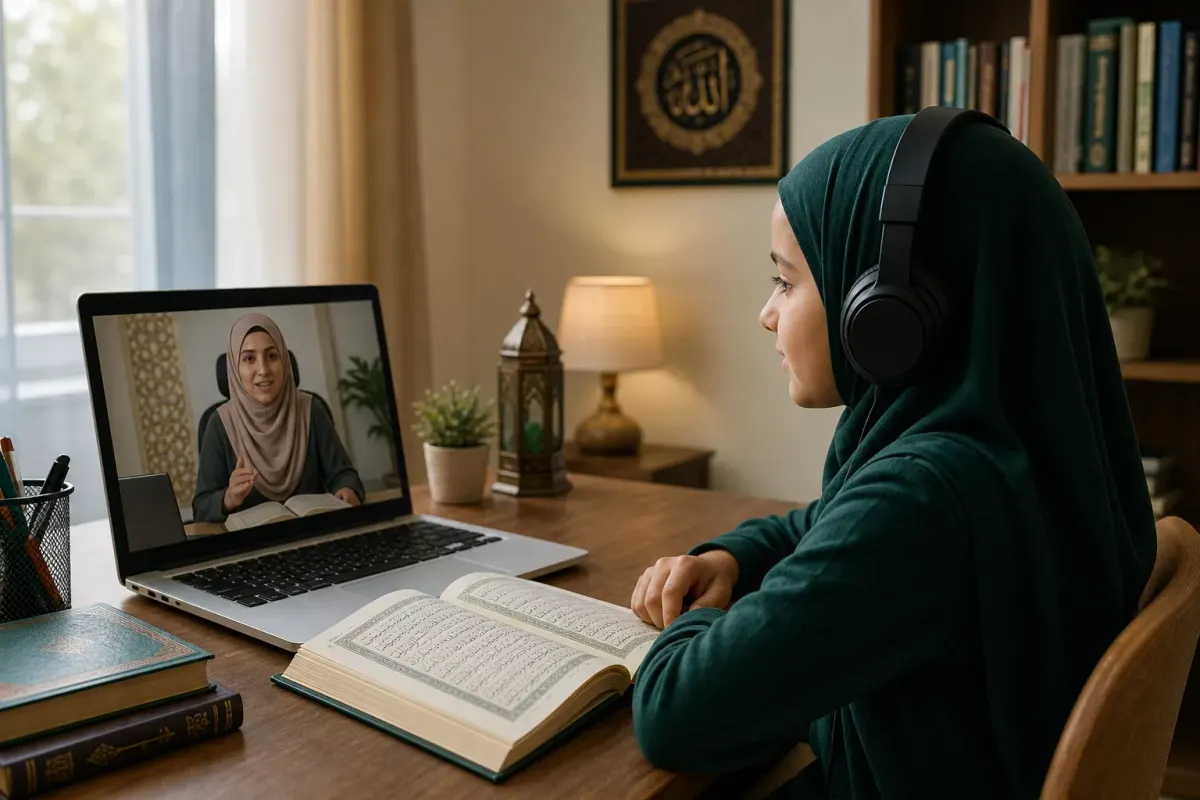
Starting online Quran learning does not require buying every app or guessing a course name. A clearer path is: understand the learner’s starting point, share goals and availability, complete a Free Assessment, then begin a structured one-to-one plan.
What you need before day one
Most families only need a quiet corner, a stable internet connection, a device with a working camera and microphone, and a calm routine for the lesson time. Headphones help when a household is busy. A printed or digital mushaf (or beginner workbook) can wait until the teacher confirms what is useful for that learner.
- Device: laptop, tablet, or phone that can run a video call reliably
- Lighting and camera angle that let the teacher see the learner’s face and materials when needed
- A consistent weekly time window (even two short sessions beat irregular long ones)
- A short note about the learner’s age, language comfort, and any prior Quran experience
Map the starting level without self-diagnosing
Parents and adult learners often feel pressure to pick “the right course” before speaking with anyone. In practice, pathways such as Noorani Qaida, Quran Reading, Tajweed, or Memorization are recommendations after conversation — not labels you must force on yourself first.
- Absolute beginners often need letter recognition and early reading foundations (commonly associated with Noorani Qaida).
- Learners who already recognize letters may focus on fluent reading with guided correction.
- Readers who want pronunciation refinement may be guided toward Tajweed-focused lessons.
- Memorization (Hifz) support is most useful when reading readiness and a sustainable routine are in place.
Why a Free Assessment is the practical first step
A Free Assessment request tells the academy who the learner is, what they want to achieve, and when they can study. The academy reviews that information, discusses current skills and preferences (such as focus area and scheduling), and recommends a suitable pathway. A trial or introductory class is not automatic for every student — next steps depend on the assessment.
- Share accurate contact details and country/time-zone context
- Describe goals in plain language (for example: “begin reading,” “improve fluency,” “support my child’s consistency”)
- List realistic availability rather than an ideal schedule you cannot keep
- Ask about teacher matching preferences when language or gender preference matters to your family
A simple first-week plan
- Day 1–2: Submit the Free Assessment and keep devices ready for a follow-up conversation.
- Day 3–4: Confirm the recommended pathway and a weekly lesson slot you can protect.
- Before lesson 1: Test audio/video; prepare a quiet space; note any questions for the teacher.
- After lesson 1: Write down the practice homework in one short checklist — five focused minutes daily often beats an unused hour.
Children and adults start differently — both can succeed online
Children usually need shorter attention windows, parental presence nearby for the first lessons, and praise for small wins. Adults often need privacy, flexible timing, and permission to restart without embarrassment. Online one-to-one lessons can support both when the schedule is honest and the goals are paced.
Common mistakes that slow beginners down
- Buying many apps before establishing a live lesson rhythm
- Skipping assessment and jumping into advanced Tajweed or memorization labels
- Choosing an overloaded weekly plan that collapses after two weeks
- Comparing progress to social media clips instead of the learner’s own baseline
What to do next
If you are ready to begin, request a Free Assessment and share the learner’s level, goals, and availability. Explore beginner-friendly pathways such as Noorani Qaida or Quran Reading if you want context before the conversation — then let the assessment refine the recommendation.
Do I need to know Arabic before starting?
No. Many learners begin with letter foundations and guided reading support. Arabic language study can be added when it supports the learner’s goals.
How long until I see progress?
Progress depends on starting level, practice consistency, and lesson frequency. Avoid guaranteed timelines — steady weekly attendance with short daily practice is the reliable pattern.
Is a Free Assessment the same as a trial class?
No. The Free Assessment is the admissions conversation and pathway recommendation. An introductory class may be arranged when appropriate, but it is not automatic for every student.
Related courses
Course pages remain the commercial landings for enrollment intent.
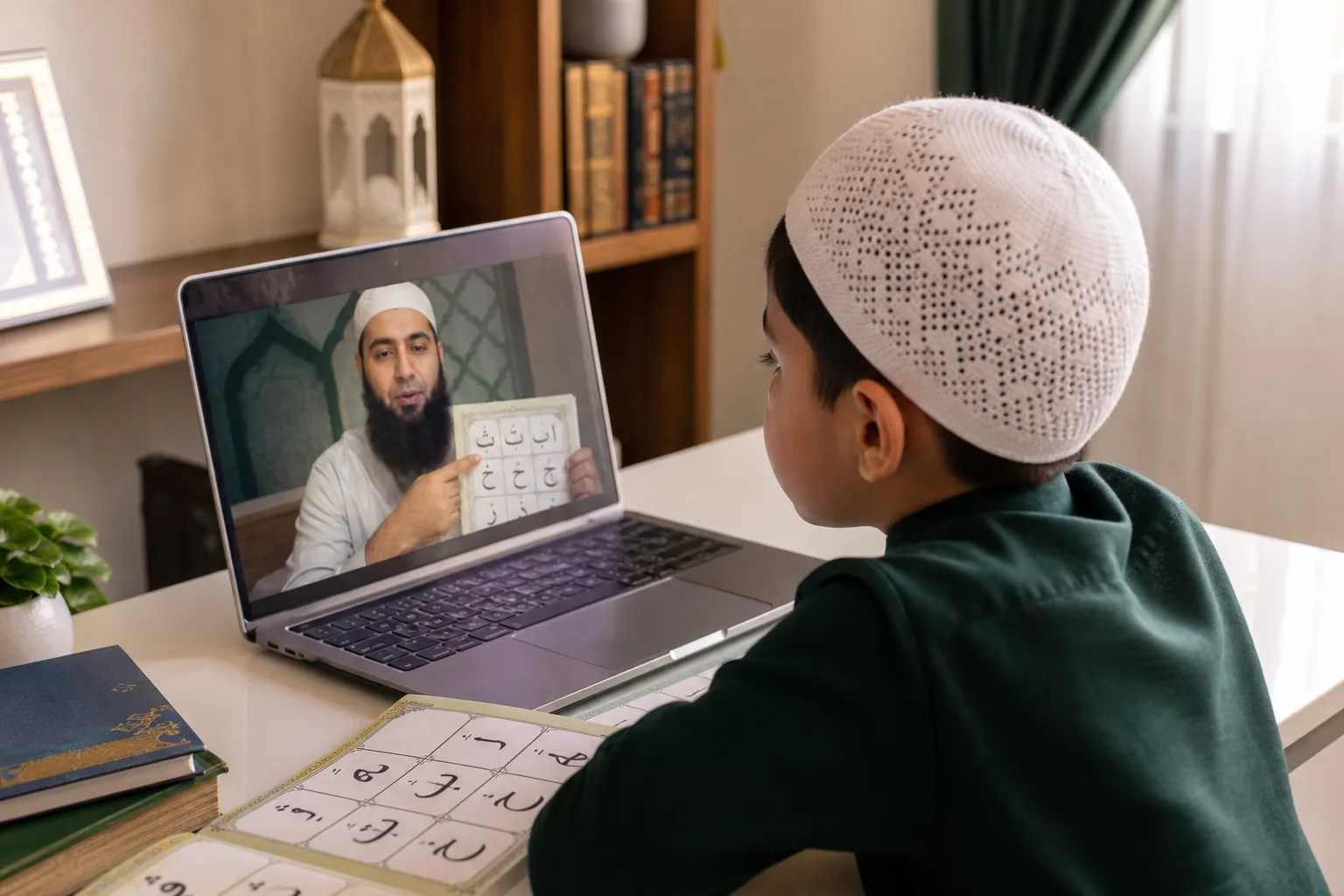
Noorani Qaida
For absolute beginners who need Arabic letter recognition, vowel marks, and joining practice before Quran reading — taught live, one-to-one, at a calm pace.

Quran Reading
For students who know the letters and are ready to read Quranic text with accuracy, fluency, and confidence under live teacher guidance.
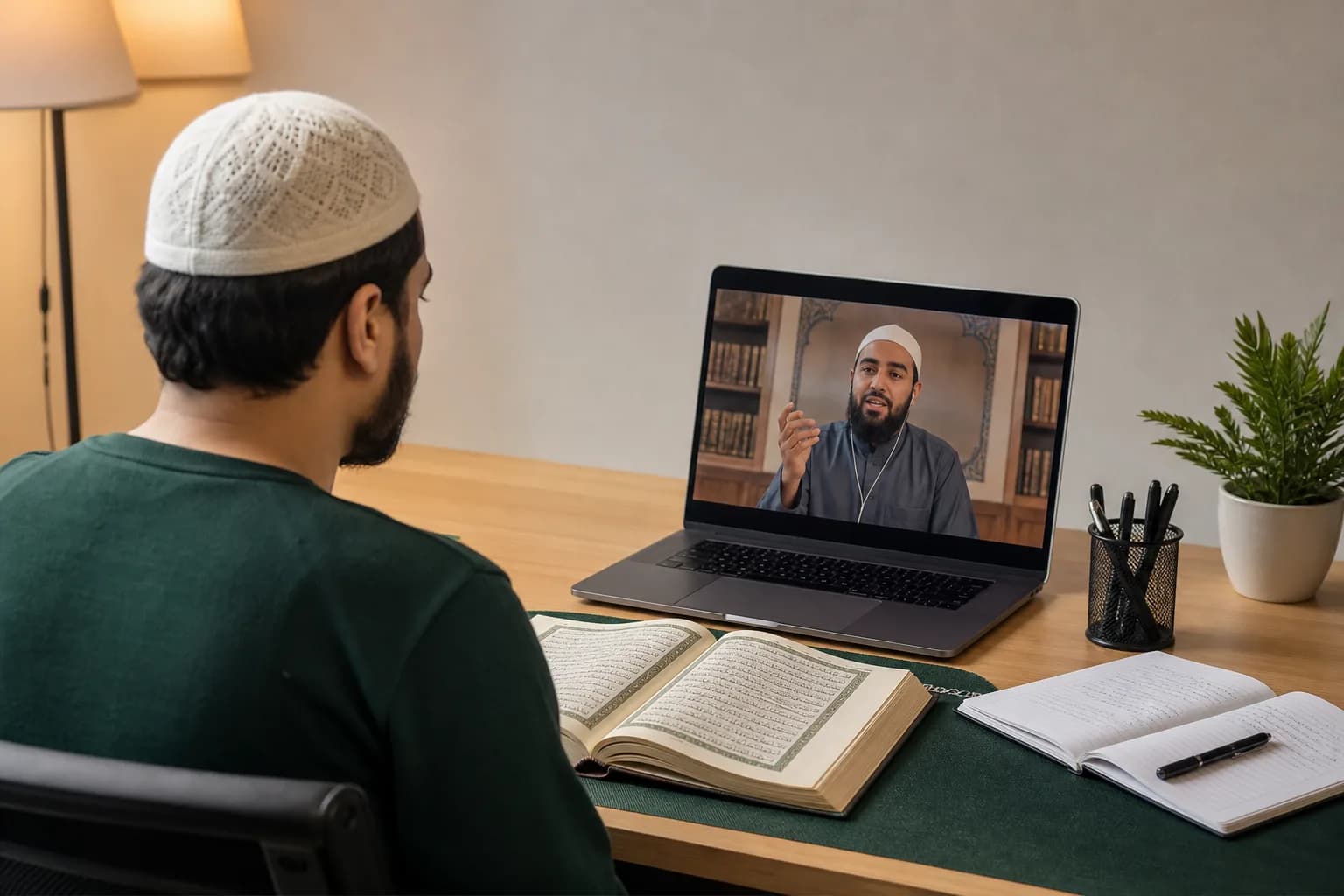
Quran with Tajweed
For readers who want essential Tajweed rules explained clearly and applied in supervised live recitation.